Eco-Friendly Roofing Options: Sustainable Choices for Your Home
Choosing a roof is one of the most significant decisions a homeowner makes. It’s your home's primary shield against the elements. But what if that crucial layer of protection could also be a force for environmental good?
The movement toward sustainable living has expanded far beyond reusable shopping bags and solar panels; it’s now reshaping the very materials we build our homes with. Eco-friendly roofing options offer durability, energy efficiency, and a reduced environmental footprint, making them smart choices for the planet and your wallet.
Here is a look at some of the most sustainable roofing materials available today.
1. Metal Roofing (Recycled Content)
Metal roofing has surged in popularity, and for good reason—it’s inherently sustainable.
Longevity: Metal roofs can last 40 to 70 years, significantly longer than traditional asphalt shingles (which often end up in landfills every 15-20 years).
Recycled Materials: Many metal roofing options (steel, aluminum, and copper) are made with a high percentage of recycled content, often 25-95% post-consumer recycled materials.
Recyclability: At the end of its long life, a metal roof is 100% recyclable, completing a truly closed-loop system.
Energy Efficiency: Lighter-colored or specially coated "cool metal roofs" reflect solar radiant heat, reducing attic heat gain and lowering air conditioning costs.
2. Recycled Content Shingles and Tiles
Innovation in manufacturing has led to roofing materials that divert waste from landfills and turn it into durable products.
Rubber Shingles: These are often made from recycled tires, offering extreme durability, resistance to high winds, and excellent impact resistance (a plus in hail-prone areas). They mimic the look of slate or cedar shakes without the environmental cost.
Plastic/Polymer Composites: Shingles and tiles made from recycled plastics (like bottles and containers) are lightweight, require less energy to transport, and are incredibly resistant to mold, mildew, and insects.
3. Natural Slate and Clay Tiles
While the initial production of these materials requires energy, their incredible lifespan makes them sustainable long-term investments.
Slate: Properly installed, a natural slate roof can last 100 to 200 years. It’s inert, non-toxic, and requires minimal maintenance.
Clay/Concrete Tiles: These tiles are highly durable and naturally fire-resistant. Their high thermal mass helps to stabilize temperatures inside the home, and their shape allows for excellent ventilation underneath, promoting cooling.
4. Green Roofs (Living Roofs)
Perhaps the most dramatic and comprehensive eco-friendly option, a green roof involves installing a layer of vegetation over a waterproofing membrane.
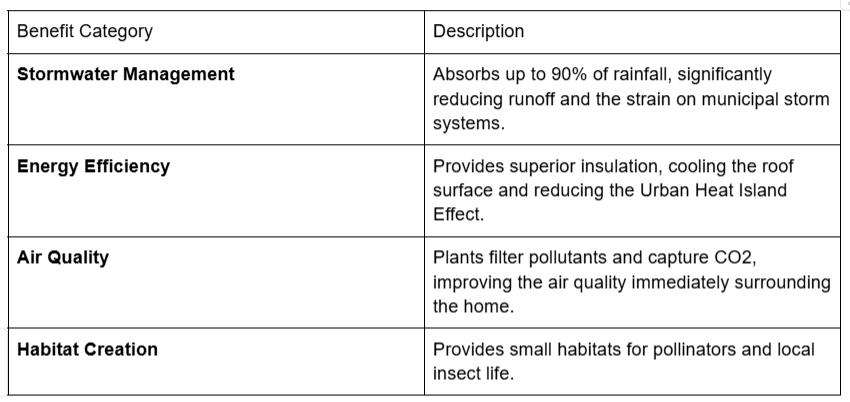
Green roofs require proper structural support and careful installation, but they turn unused roof space into a functional ecosystem.
5. Solar-Ready Roofing and Shingles
Integrating solar power directly into your roofing material is the ultimate step in turning your roof into an active, sustainable powerhouse.
Solar Shingles: These are designed to look like traditional shingles while generating electricity. They are integrated seamlessly into the roofline, offering an aesthetic advantage over traditional panel arrays.
Preparation: Even if you don't install solar immediately, choosing a durable, long-lasting roof (like metal) means the investment you make in solar panels won't have to be disturbed for a roof replacement decades later.
Making Your Sustainable Choice
When evaluating eco-friendly roofing options, consider three key factors:
Life Cycle Assessment: How long will the material last? The longer the lifespan, the lower its environmental impact over time.
Embodied Energy: How much energy was required to manufacture and transport the material? Recycled materials generally have lower embodied energy.
Local Climate: Does the material suit your region? A cool roof is crucial in the Southwest, while durability against heavy snow is vital in the Northeast.
By choosing a sustainable roofing option, you are doing more than just protecting your home—you are investing in a healthier planet and a more energy-efficient future.