
How to Maintain Your Asphalt Shingle Roof Year-Round
Your asphalt shingle roof is one of the most critical components of your home's defense against the elements. It shields your family and possessions from rain, sun, wind, and snow. Given the significant role it plays, ensuring its longevity and performance through year-round maintenance is paramount. A well-maintained roof can last decades, saving you the expense and hassle of premature replacement. This comprehensive guide details the essential steps you need to take throughout the year to keep your asphalt shingle roof in peak condition.
The Seasonal Approach to Roof Maintenance
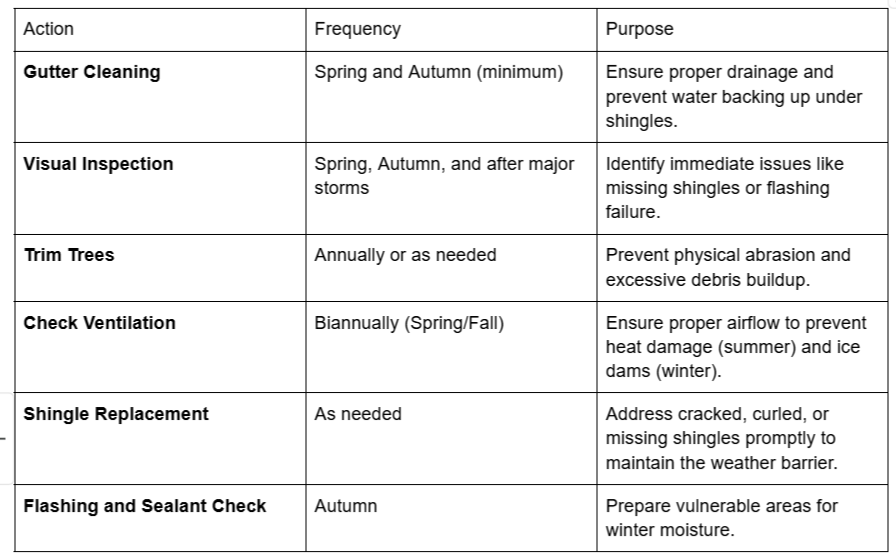
Effective roof care should follow a seasonal schedule, addressing specific environmental challenges as they arise.
Spring: Inspection and Repair
After a harsh winter, spring is the ideal time for a thorough inspection to assess any damage caused by ice, snow, and freeze-thaw cycles.
1. Detailed Visual Inspection
Conduct a visual inspection from the ground using binoculars, or safely from a ladder if comfortable. Look for the following indicators of damage:
Missing or Damaged Shingles: High winds can tear away or lift shingles. Replace any missing ones immediately and repair any that are cracked, curled, or buckling.
Granule Loss: Shingle granules protect the asphalt from UV rays. Check gutters for excessive buildup of granules, which indicates that the shingles are wearing out.
Loose or Exposed Nails: Nails can back out over time, creating potential entry points for water. Use roofing cement to seal exposed nail heads.
Flashing Issues: Inspect the metal flashing around chimneys, vents, skylights, and valleys. Ensure the sealant is intact and the flashing is firmly attached. Cracks in flashing sealant are common weak points.
2. Clean and Clear Gutters
Winter debris—twigs, leaves, and granules—can clog gutters and downspouts. Clogged gutters prevent proper water drainage, causing water to pool and potentially seep under shingles, leading to fascia and soffit rot. Clean them thoroughly and ensure the downspouts are moving water away from the foundation.
3. Moss and Algae Treatment
Spring's moisture can encourage the growth of moss, algae (often appearing as dark streaks), and lichen. While primarily cosmetic, heavy growth can lift shingles and trap moisture. Treat with an approved roof cleaning solution (often a mild bleach solution or commercial cleaner) and gently rinse. Never use a high-pressure washer, as this will strip protective granules. Install zinc or copper strips near the ridge to prevent future growth; as rain washes over them, the metallic ions inhibit biological growth.
Summer: Protection from the Sun
The summer sun and high temperatures can be surprisingly damaging to asphalt shingles, accelerating the aging process.
1. Trim Overhanging Branches
Trees that hang over the roof can scrape away granules in the wind, deposit debris, and offer shade that encourages moss and mildew. They also pose a risk during storms. Trim all branches back at least 6 to 10 feet from the roof surface.
2. Attic Ventilation Check
Proper attic ventilation is crucial in summer. A poorly ventilated attic can reach extreme temperatures, effectively "baking" the shingles from underneath and significantly shortening their lifespan.
Ensure all soffit and ridge vents are clear of insulation or obstructions.
Confirm that the attic fan (if applicable) is functioning correctly.
Adequate airflow prevents heat buildup and reduces energy costs.
3. Monitor for Shingle Blistering
In intense heat, tiny air bubbles trapped during the manufacturing process can expand, leading to blistering on the shingle surface. While small blisters may be harmless, a prevalence of large or broken blisters indicates excessive heat exposure and potential shingle failure. Ensure proper ventilation to mitigate this risk.
Autumn: Preparation for Winter
Fall maintenance is focused on preparing the roof to withstand the coming cold, moisture, and potential snow load.
1. Final Debris Clearance
Before the heavy rains and snow arrive, clear all leaves, needles, and debris from the roof surface and gutters. This prevents organic material from holding moisture against the shingles over the winter.
2. Inspect and Seal Flashings
Re-examine all flashing and penetration points. Use a high-quality, cold-weather-compatible roofing sealant (like elastomeric or silicone caulk) to seal any minor cracks or gaps around vents, pipes, and chimneys. A small, inexpensive tube of sealant can prevent thousands of dollars in water damage.
3. Attic Insulation Check
Ensure your attic insulation is installed correctly to maintain a cool attic space (to prevent ice dams) and a warm living space. The insulation level should be adequate for your climate. Inconsistent attic temperatures are a major contributor to ice dam formation.
Winter: Ice and Snow Management
While asphalt shingles are designed to handle cold, the combination of snow, ice, and fluctuating temperatures creates the highest risk of interior water damage due to ice dams.
1. Ice Dam Prevention
Ice dams form when heat escapes from the attic, melts snow on the roof, and the meltwater refreezes when it hits the cold eaves. The resulting ridge of ice prevents further meltwater from draining, forcing it under the shingles.
Do not chip or hack at ice dams. This can severely damage the shingles and flashing.
Use a roof rake to safely remove the first few feet of snow from the edges of the roof after a heavy snowfall.
If an ice dam forms, use calcium chloride-based ice melt products (not rock salt) placed in a nylon stocking to melt channels through the dam, allowing water to drain.
2. Monitor for Interior Leaks
During heavy snow or persistent cold snaps, frequently check the attic and the underside of the roof deck for signs of water infiltration, such as damp spots, discoloration, or dripping. Early detection is key to limiting damage.
Essential General Maintenance Tips
Beyond the seasonal checks, these practices ensure overall roof health:
The Importance of Professional Inspection: While DIY inspections are valuable, it is highly recommended to hire a professional roofing contractor for a comprehensive inspection every 3 to 5 years, or after any severe weather event. Professionals can spot subtle issues, such as deck soft spots or hidden flashing defects, that a homeowner might miss.
By adhering to this rigorous, year-round maintenance schedule, you can maximize the lifespan of your asphalt shingle roof, protect your home from costly water damage, and maintain your home's curb appeal and value. Consistency is the key to longevity.